Every band's first gig runs into the same awkward loop: venues want proof you can bring a room, and you need a gig to get that proof. There's no clever way around it. What works is choosing a room you can realistically fill, writing a short email that respects a promoter's time, and then doing the boring bits — the invites, the poster, the follow-up — properly. Here's the process, whether you're in Sheffield, Cardiff, Glasgow or a London postcode where the queues are longest.
Start with rooms you can actually fill
The mistake new bands make is aiming at the 500-capacity room down the road because that's where they'd like to play. Promoters there are working with acts who can sell tickets today. Your first gig lives somewhere smaller: a pub back room with a PA, a grassroots venue in the low hundreds, a support slot for a touring band passing through, a record shop in-store, a university society night, or a charity fundraiser where the organiser is simply glad of anyone reliable.
Find these rooms by going to gigs. Look at the poster on the door and note the promoter's name along the bottom — that's the person you need, not the venue's general inbox. Check regional listings sites, follow the venues you like, and see which bands are taking support slots one step ahead of you.
Keep a spreadsheet: room, capacity, promoter, contact, genre, whether there's a house drum kit and backline, whether a sound engineer is provided, and how they prefer to be approached. Twenty or thirty entries gives you something to work through over the next few months.
Get your materials ready before you email anyone
Promoters decide in seconds. Having everything in one place means you can send a short email instead of a long one.
What a promoter needs from you
- Three or four sentences about the band: who you are, where you're based, what you sound like.
- One good photograph — not a phone snap of five people in a dark room.
- Two songs, as streaming links rather than downloads.
- Video of the band playing live. With no gigs behind you, phone footage of a full rehearsal playing one song properly is acceptable and often useful.
- Social accounts, one contact name, a mobile number.
- An honest note on your draw: how many people you can reliably bring to that city. Fifteen who actually turn up is worth more than a claim of 200.
Put it all on a single page or one link, and don't attach large files.
Write the email a promoter will actually read
Keep it under 150 words. Put the useful information in the subject line: Support slot wanted — [genre] band from [city], available from June. Use the promoter's name. Explain why you're writing to them specifically, which usually means mentioning a night you went to.
Hi Sam — we're [band], a three-piece from Salford playing noisy guitar pop. We were at your show at the [venue] in March and it felt like a room we'd fit. We've no live dates yet, so we're after a support slot from June onwards. Bio, two songs and a rehearsal video are all in the one-pager below, and we can bring 20 people. Any chance of a slot?
A few habits that keep you out of the deleted pile:
- Don't BCC twenty venues in one go. It reads exactly as it is.
- Don't ask "any gigs going?" and leave it there. Offer something — a date range, a support set, a guarantee of numbers.
- Follow up once, a week later, in two lines. Then move on.
- Don't take silence personally.
Agree the money — and everything else — before you say yes
"Fee" means different things depending on the room, so ask rather than assume.
- Is it a guarantee, a door split, or nothing? If it's a split, who counts the door?
- Are you headlining or supporting, and what time do you play?
- What's the load-in time and curfew, is there backline in the room, and is an engineer provided?
- How many guests can you put on a list, and by when?
At the bottom of the circuit, first gigs often pay very little, and sometimes it's a share of the door and no more. That's normal. What isn't normal is being asked to sell a block of tickets, or to pay for them upfront in order to get the slot. Arrangements like that put the risk on you and almost none on the promoter. There are better rooms.
Once money becomes regular — paid gigs, expenses, splitting income between members — get proper advice from someone who deals with self-employed performers, whether that's a Musicians' Union representative or an accountant.
Promote the night as if it's yours, because it is
Nobody will promote your set for you. Build the event page early, make a poster that lists every band in the same size type — promoters notice when you don't try to look like the headliner — and tag the venue and the other acts when you share it.
Beyond that, promotion is mostly individual messages. Message ten people directly rather than posting once to a group chat. Ask two friends to share it. Put up four physical posters where your audience actually goes: the rehearsal rooms, the record shop, the café near the venue. Post a twenty-second clip two days before, then once on the day.
Buy a ticket yourself if there's a presale running. It tells the promoter you're serious, and it costs less than the round you'll buy afterwards.
On the night
- Arrive for load-in, not for your set time.
- Be ready for soundcheck and know what you need from the engineer.
- Stay for the whole night and watch the other bands from the front, not the bar.
- Speak to the promoter at the end, briefly, when they aren't carrying a cash box.
- Thank the sound engineer. They'll remember it next time.
The follow-up that gets you booked again
The next day, send the promoter a short message: thanks for the slot, here's roughly how many people came for you, here's a photo, we'd love to do it again. That one message is often the difference between being on the list of bands they call and being forgotten.
Then book the next one within a fortnight, while the momentum is still there. Two or three small gigs in the same city, a couple of months apart, will teach you more than waiting for the perfect offer. Be reliable, be easy to deal with, and the rooms get bigger on their own.
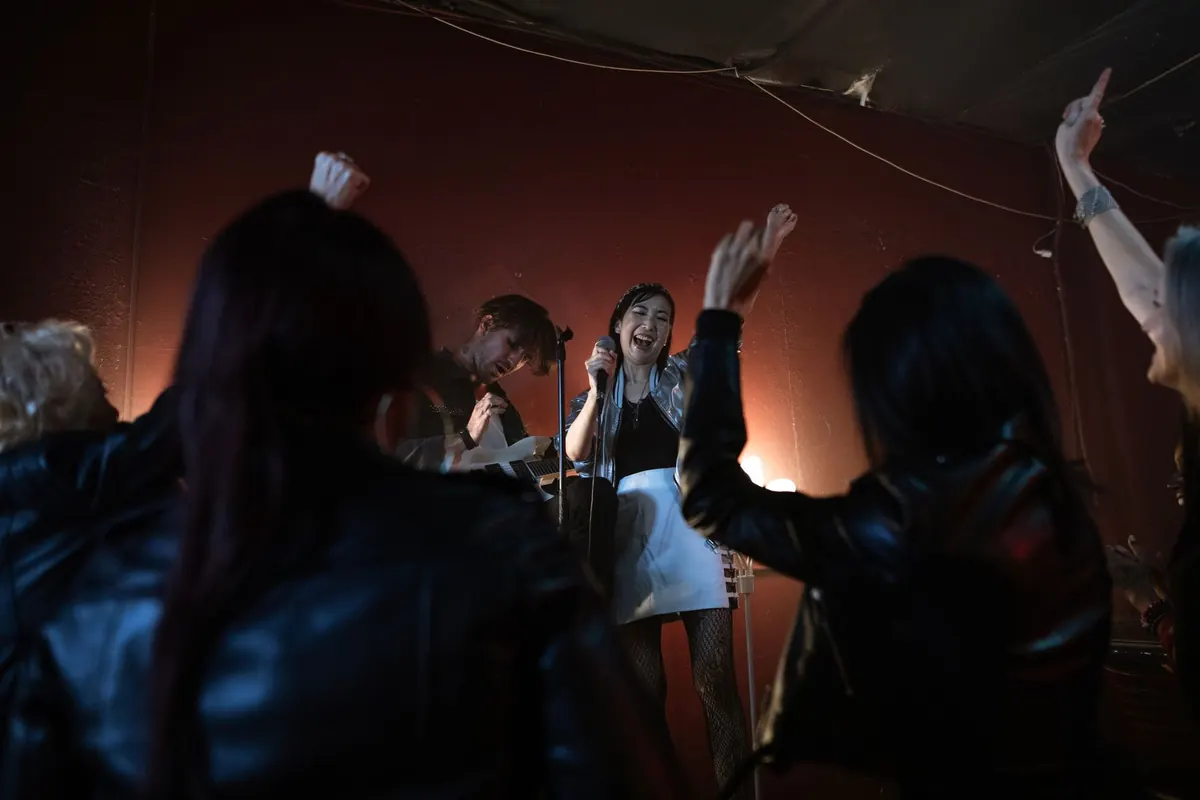
Photo: RDNE Stock project / Pexels